

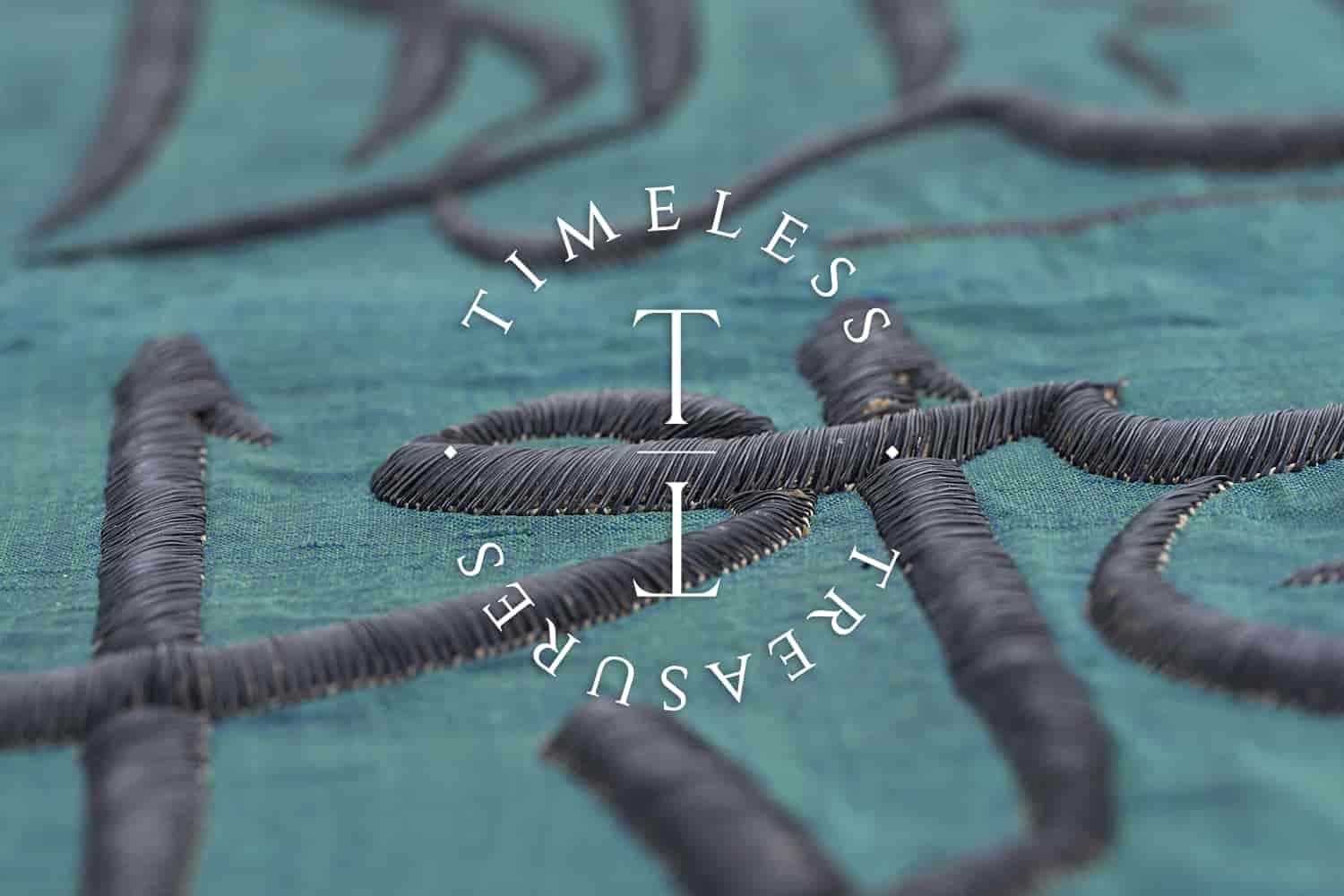
19TH CENTURY OTTOMAN KA’BAH CLOTH – ABDULLAH ZÜHDÎ EFENDİ
£40,000.00
Dar-ül Kiswa Workshop, Ottoman Empire, 19th Century
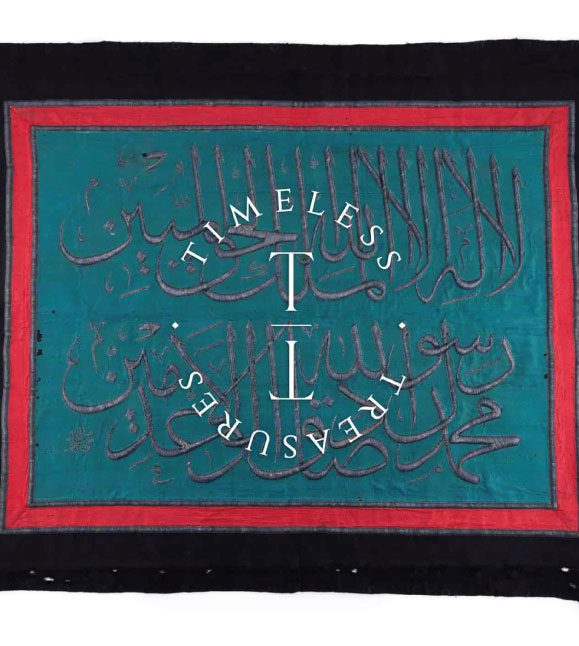
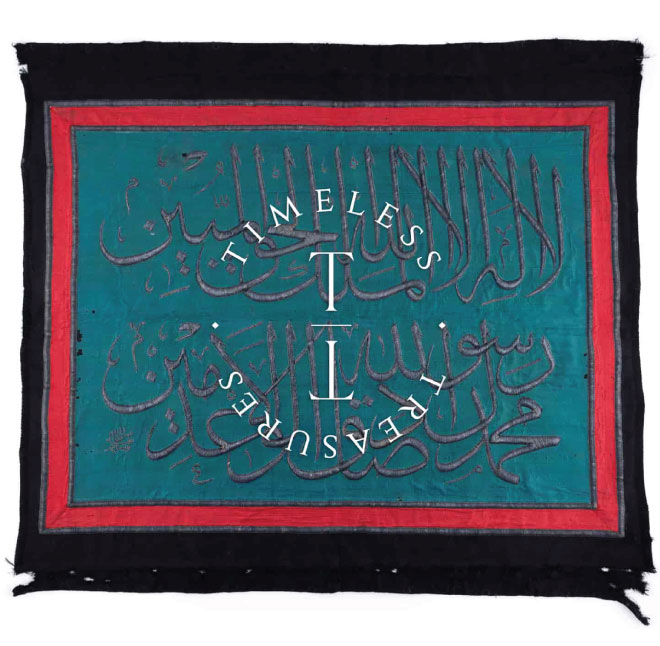
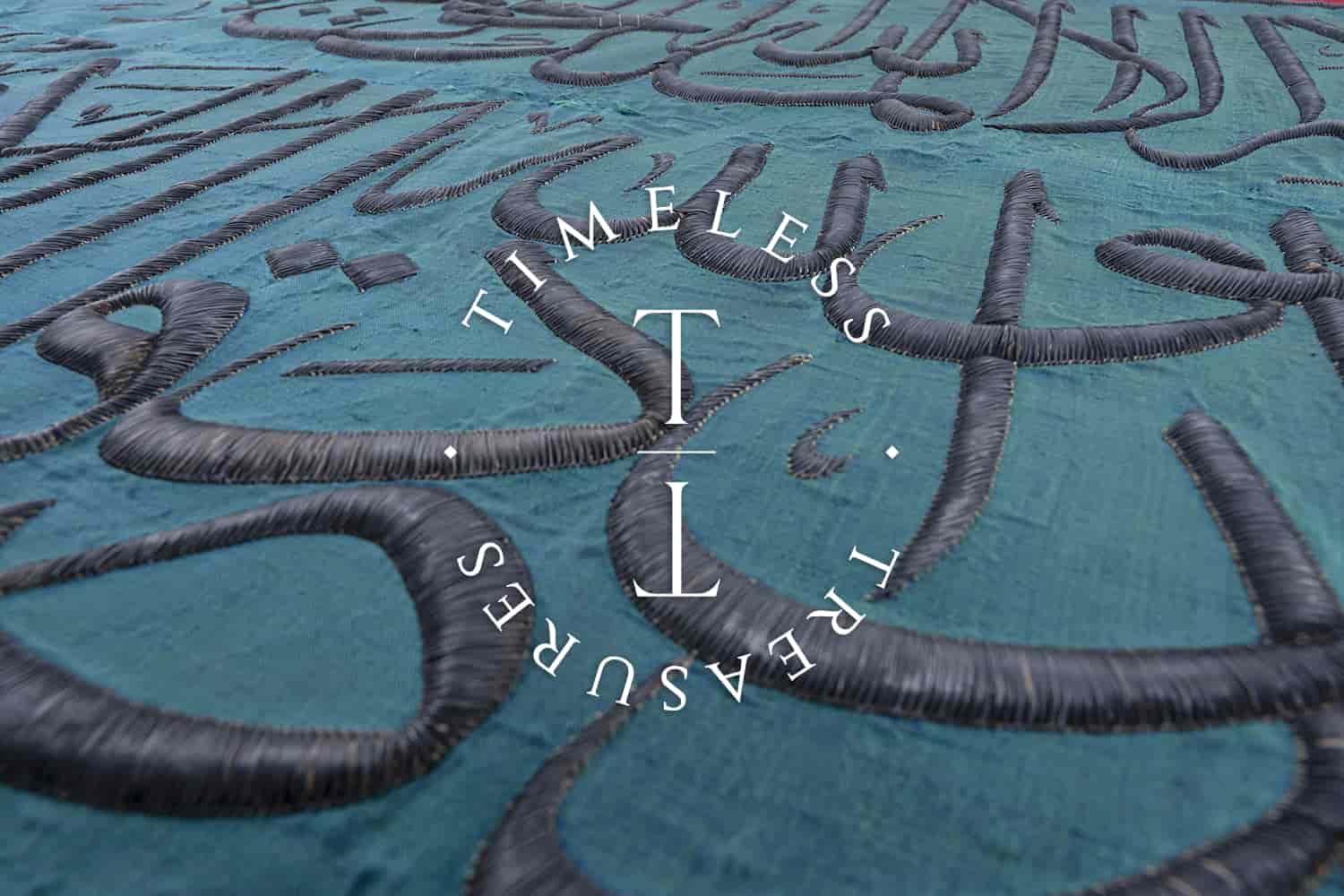
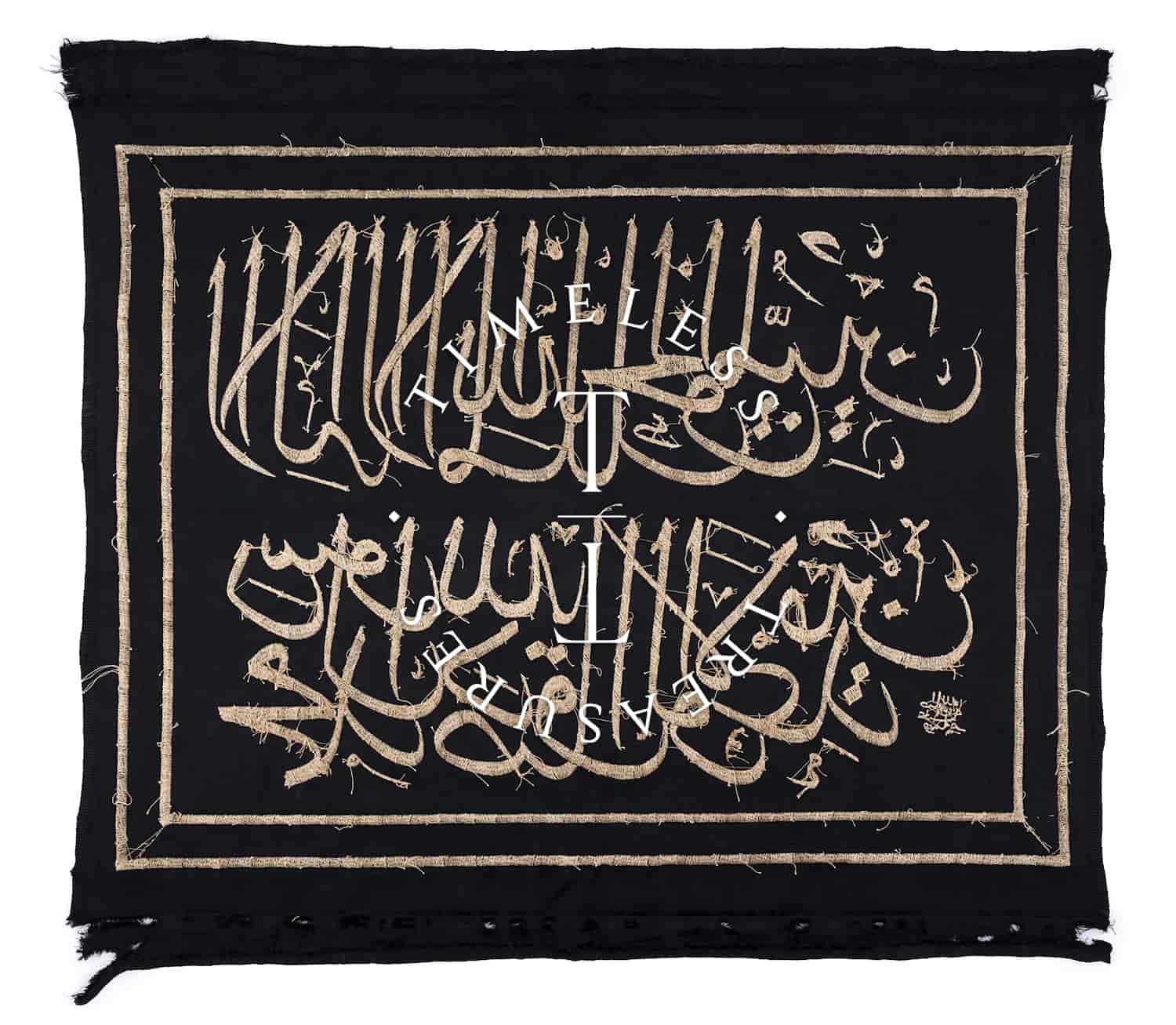
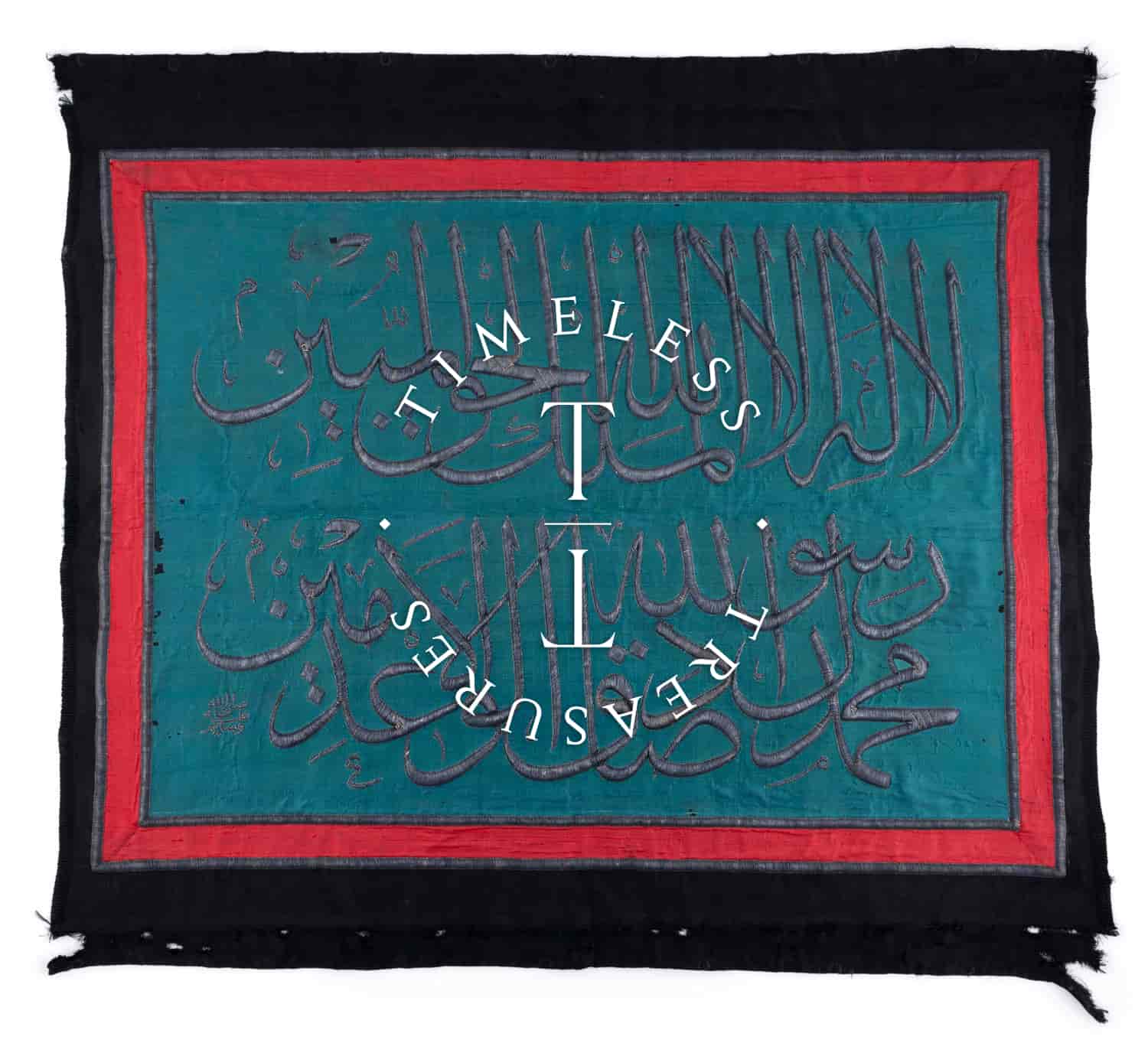
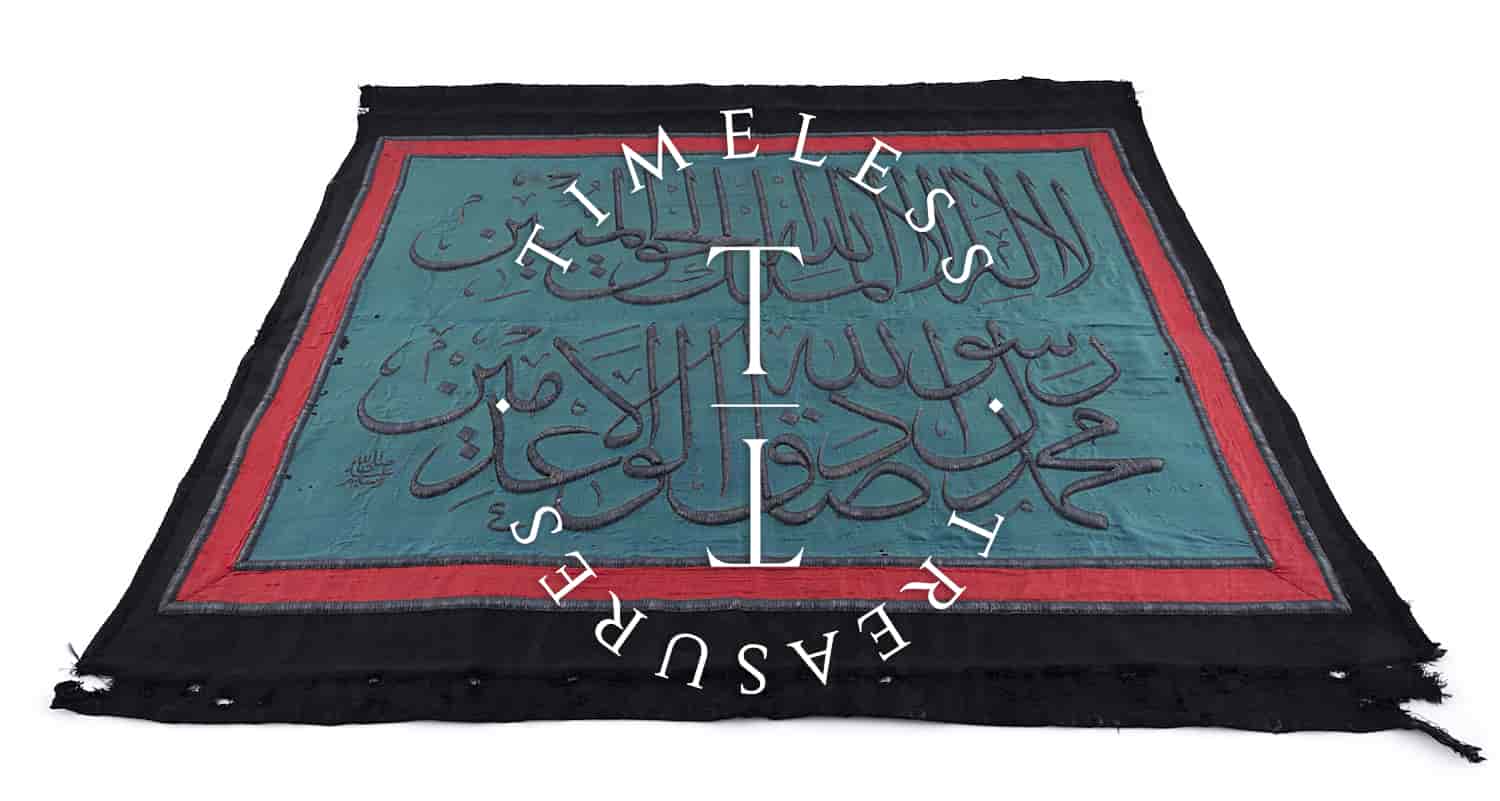
An extraordinary masterpiece of Ottoman artistry and spiritual devotion, this Ka’bah cover was crafted by the renowned calligrapher Abdullah Zühdî Efendi in the 19th century. Produced in the prestigious Dar-ül Kiswa workshop in Cairo, this piece stands as a testament to the height of Ottoman craftsmanship and religious reverence.
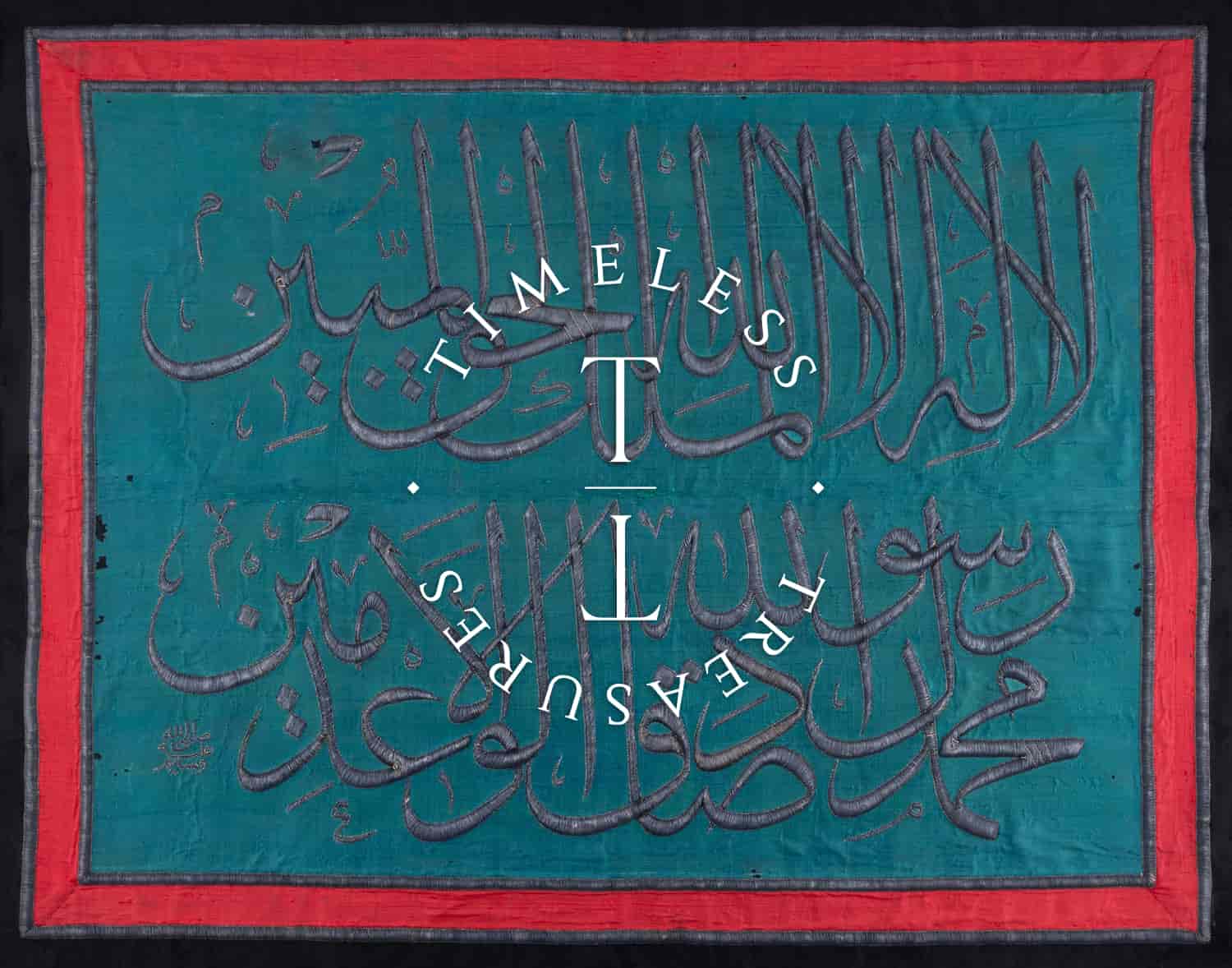
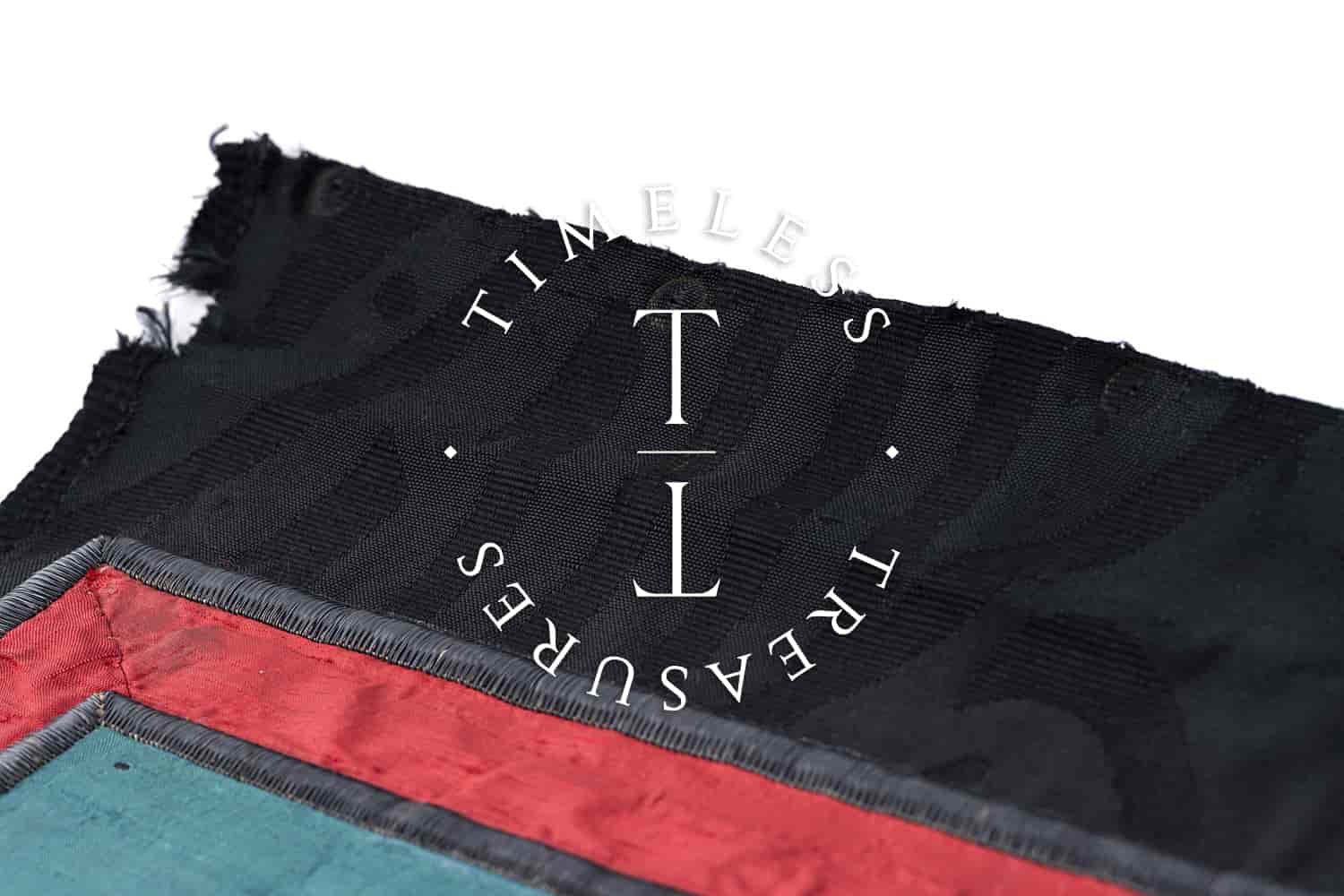
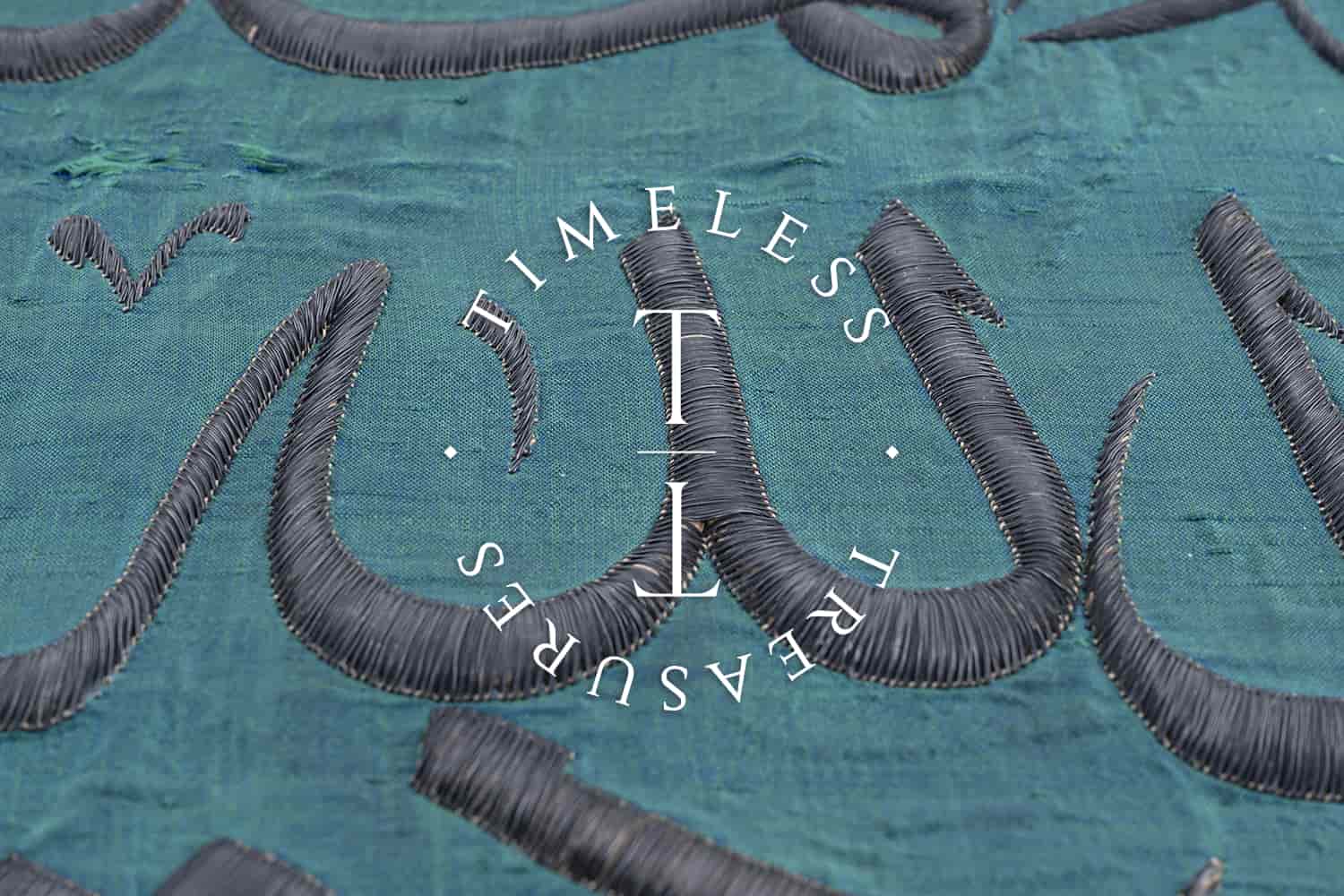
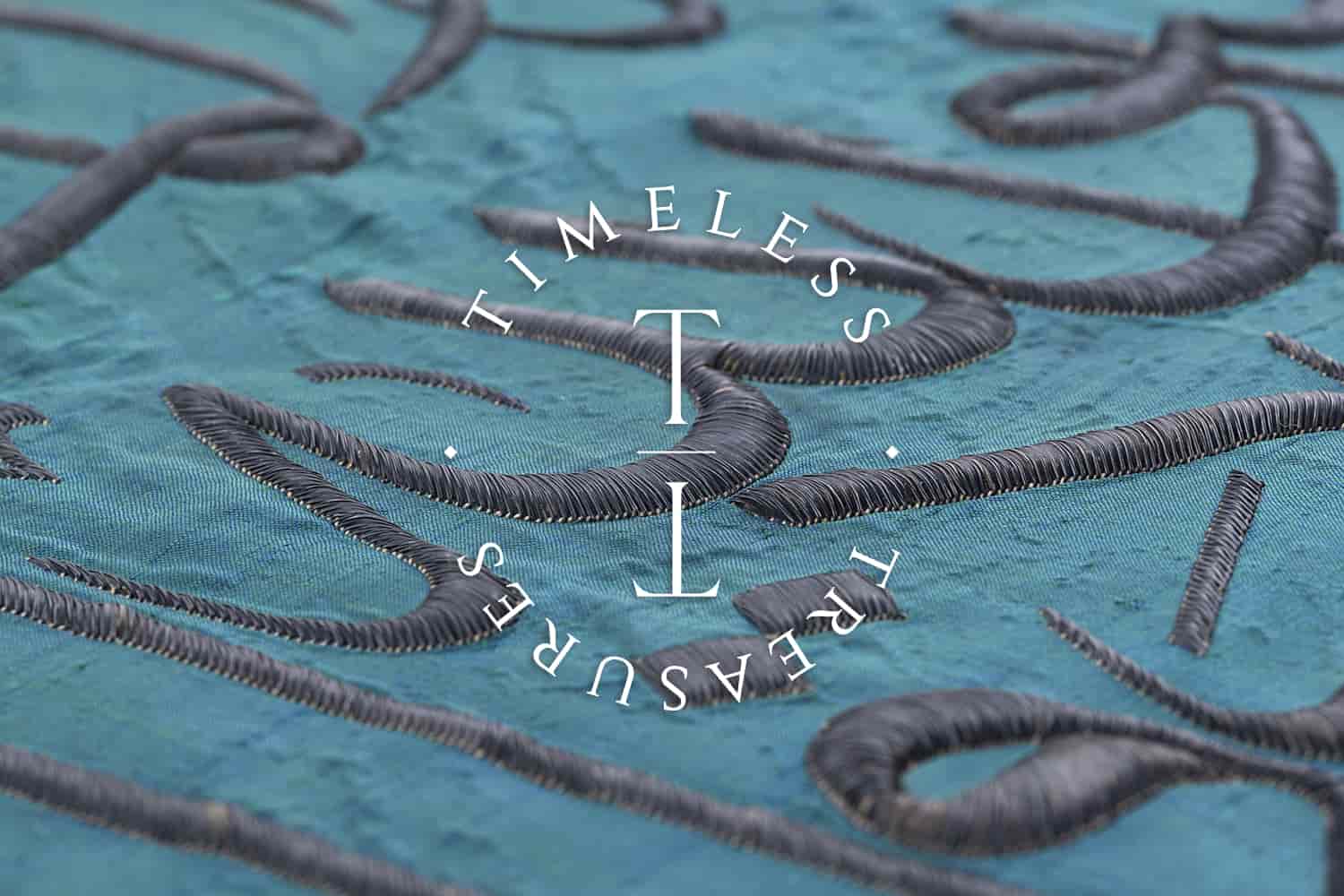
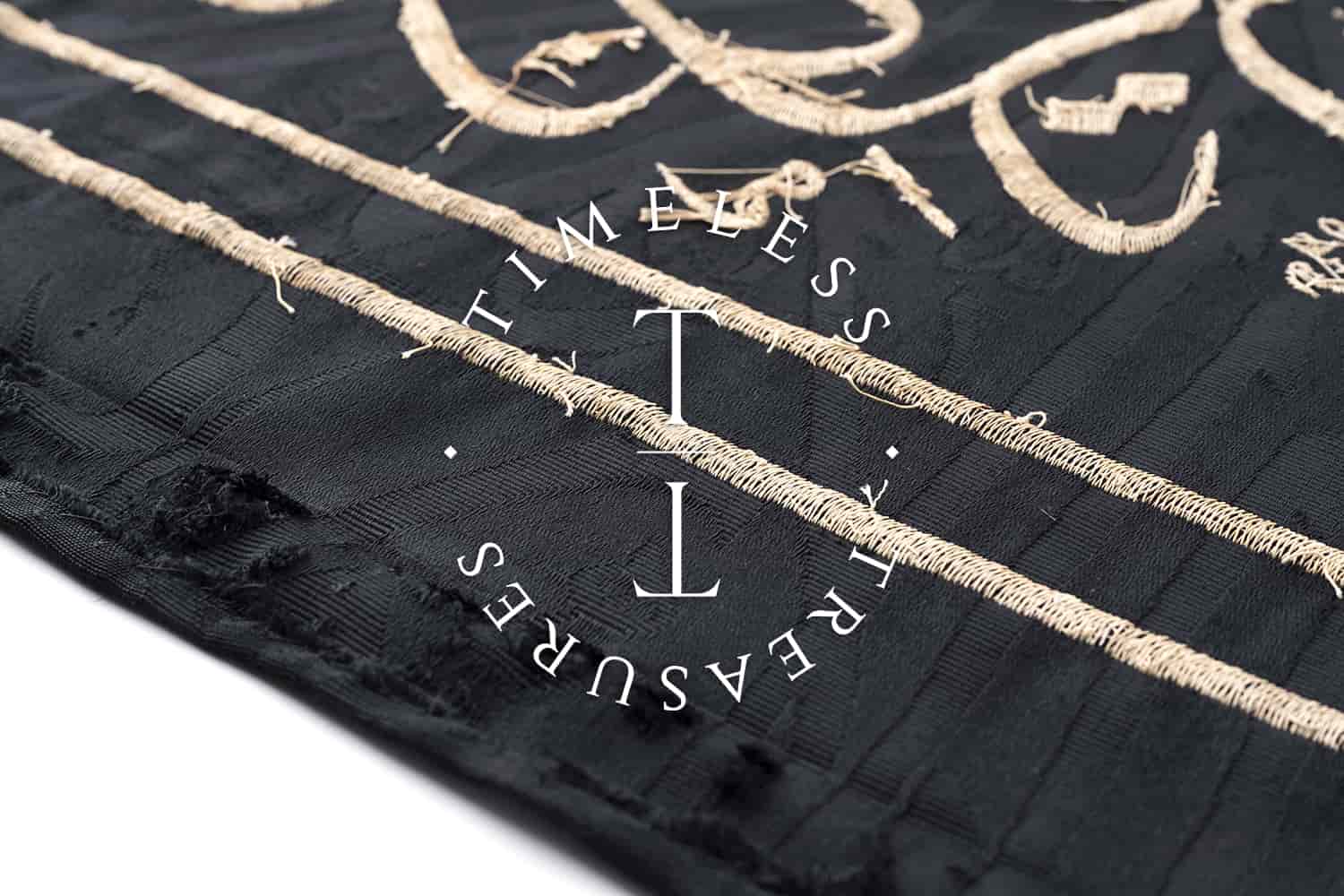
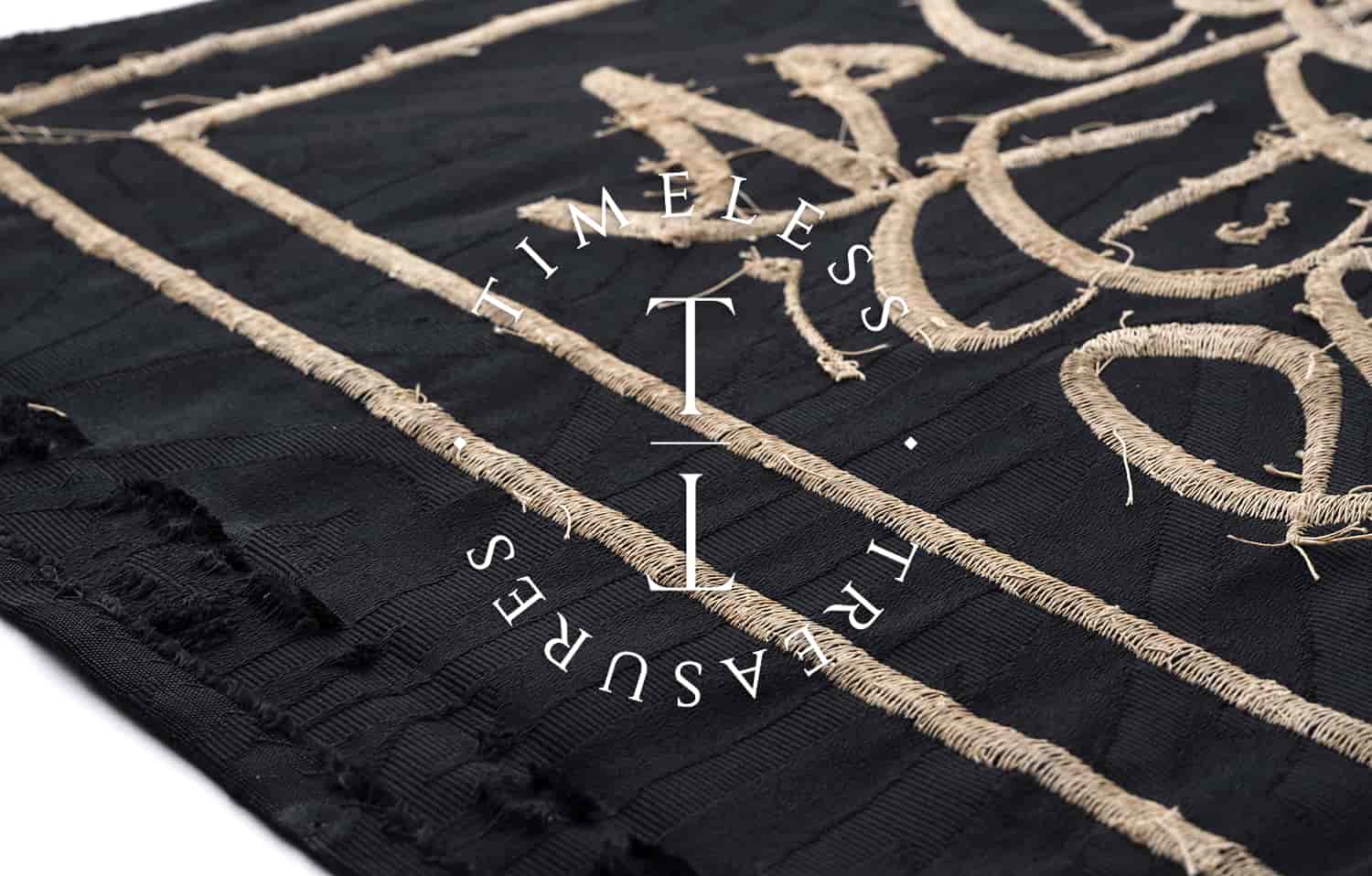
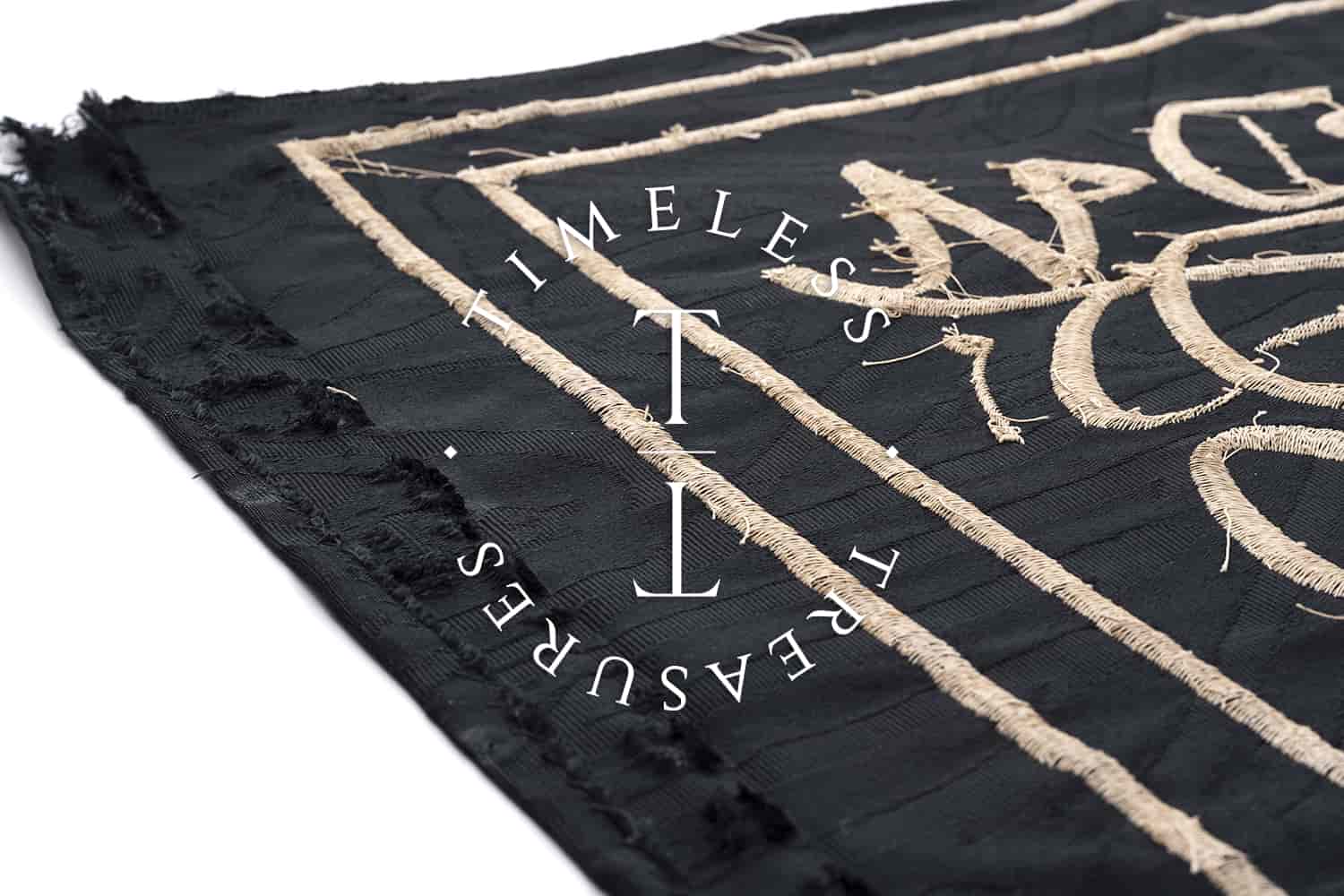
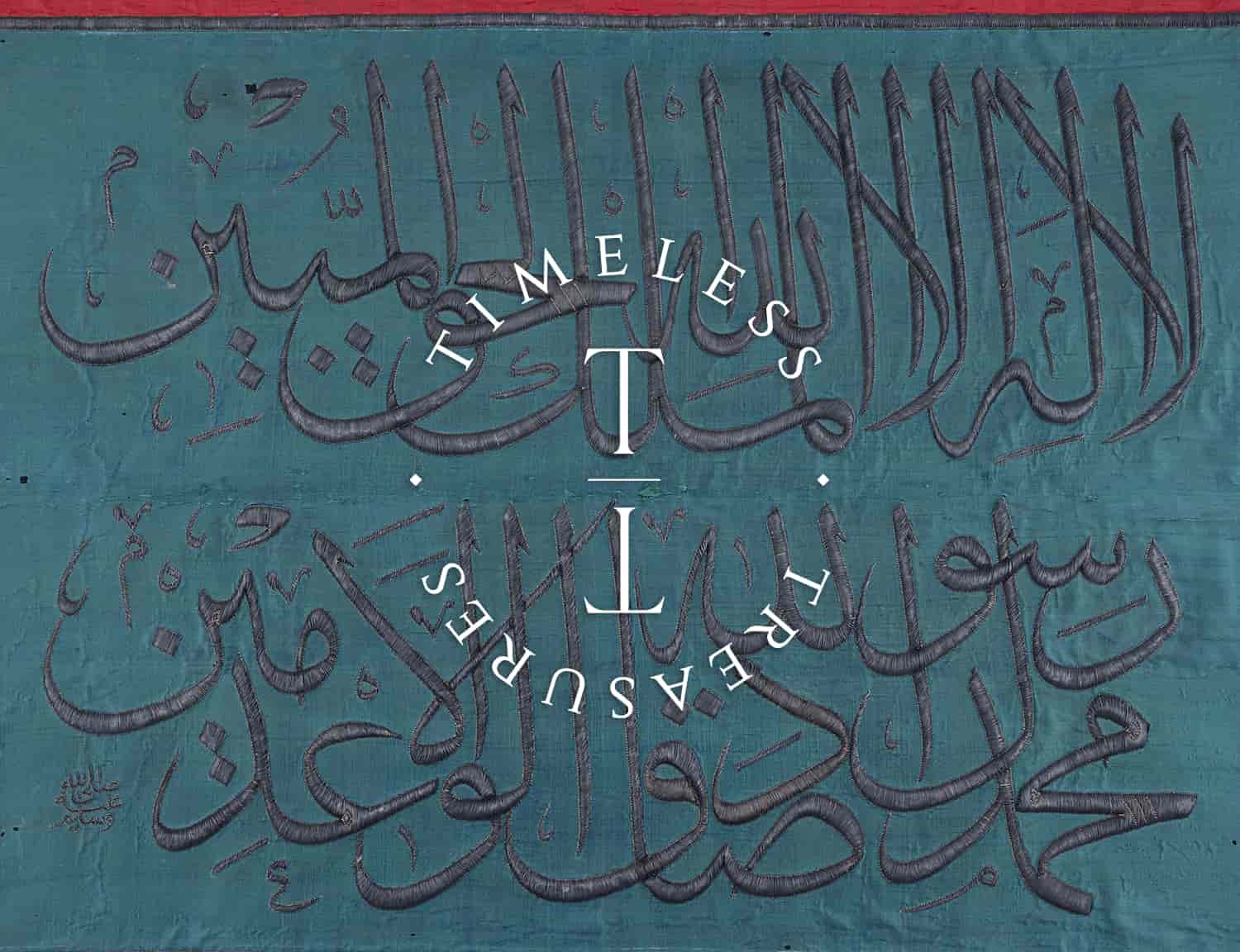
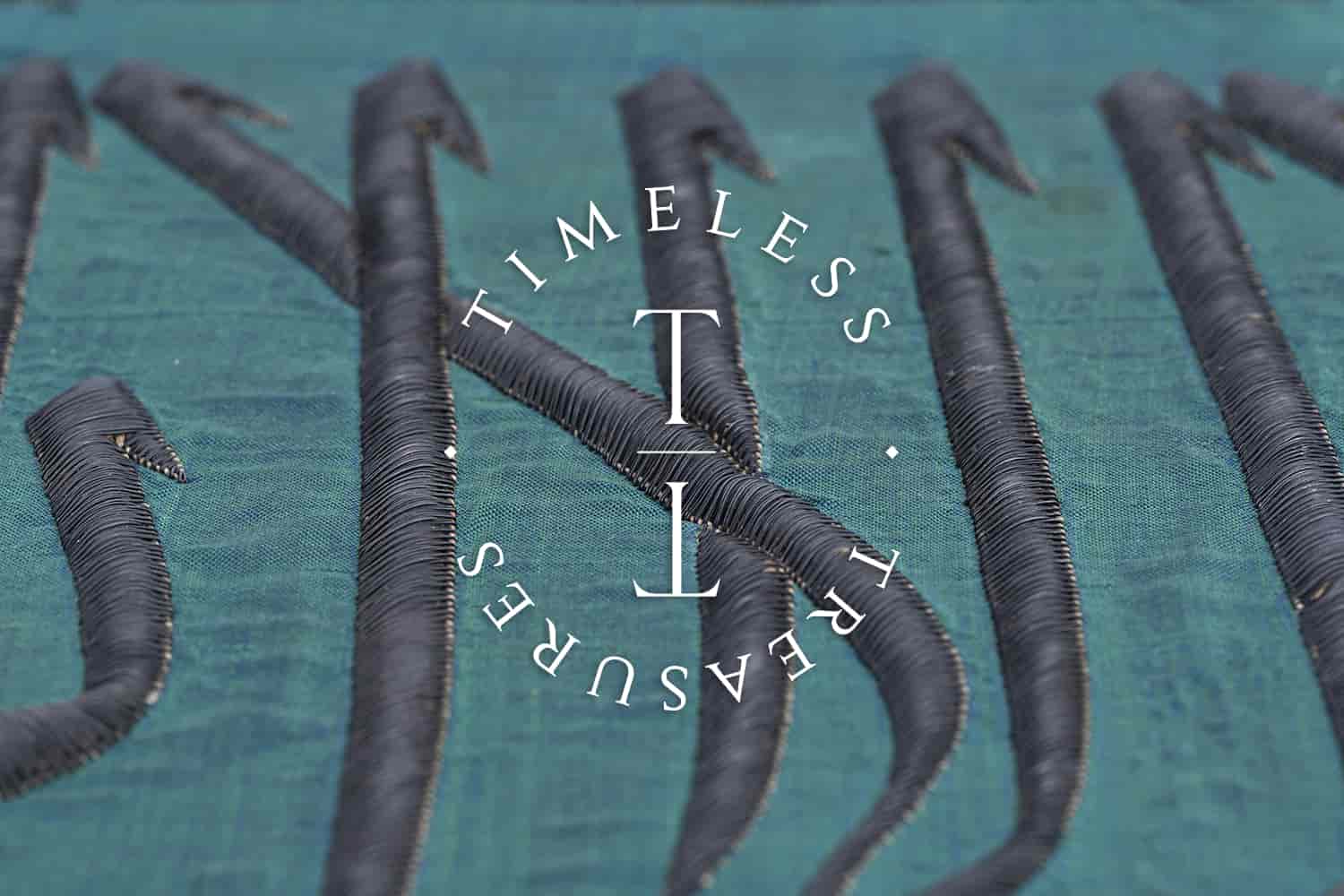
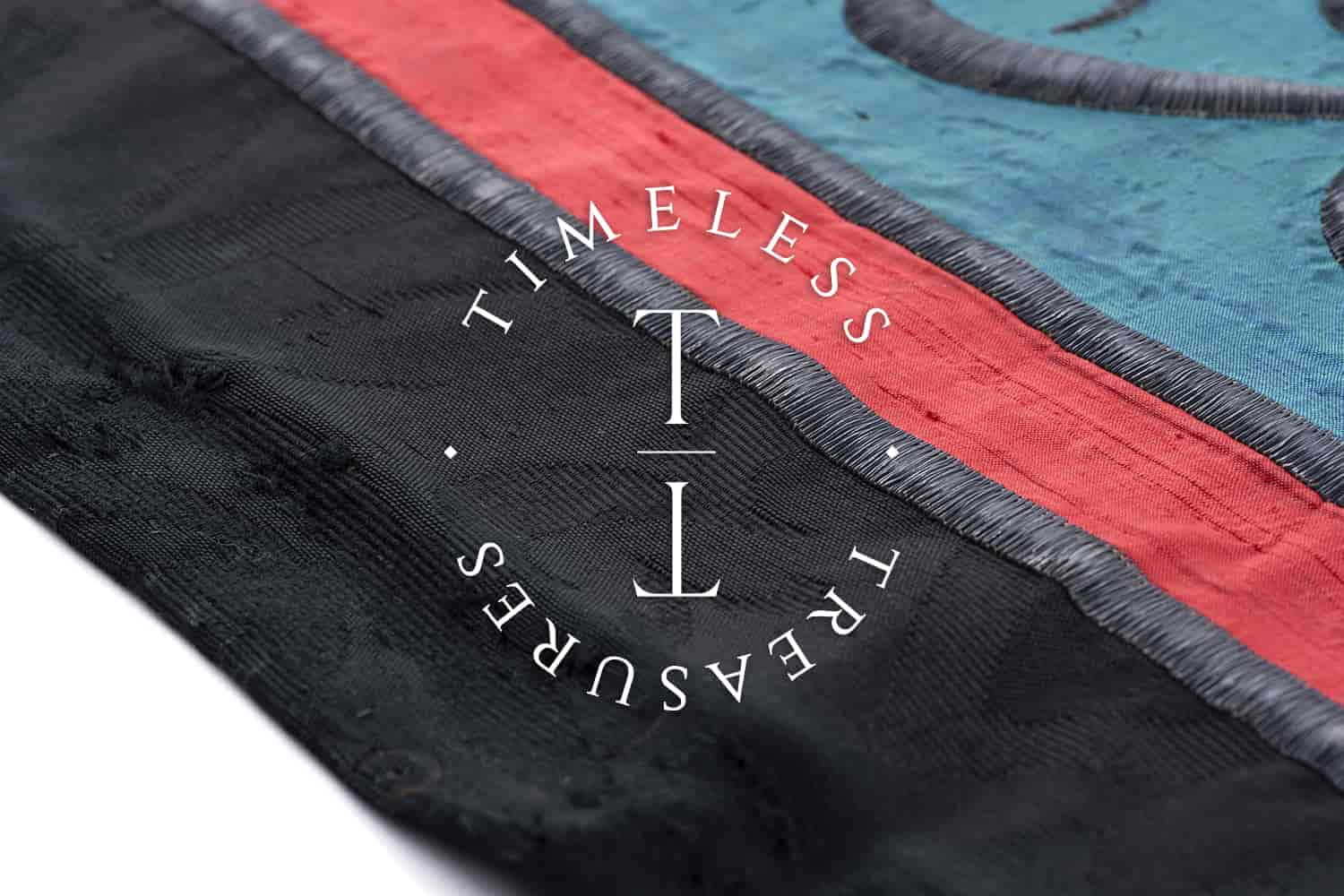
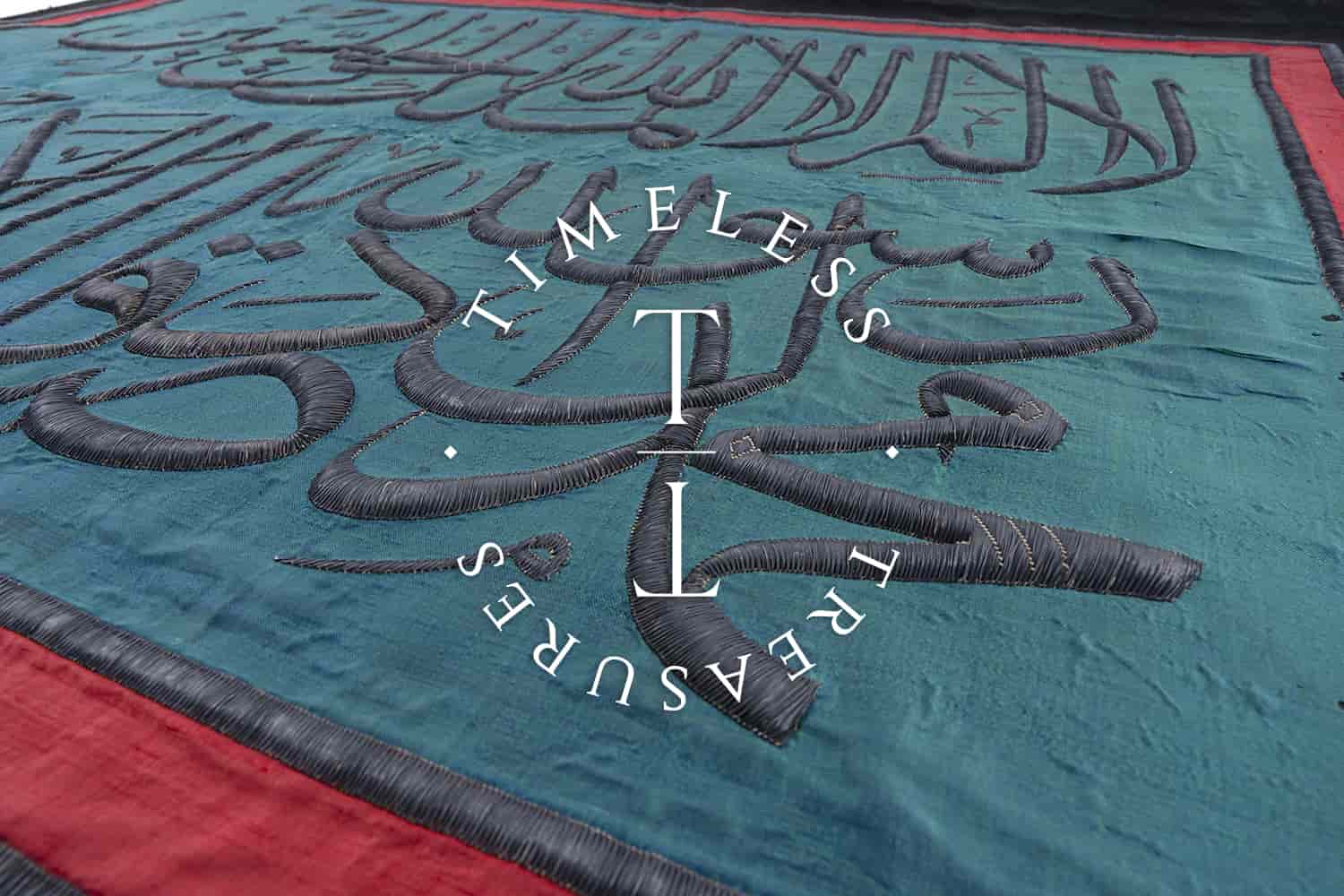
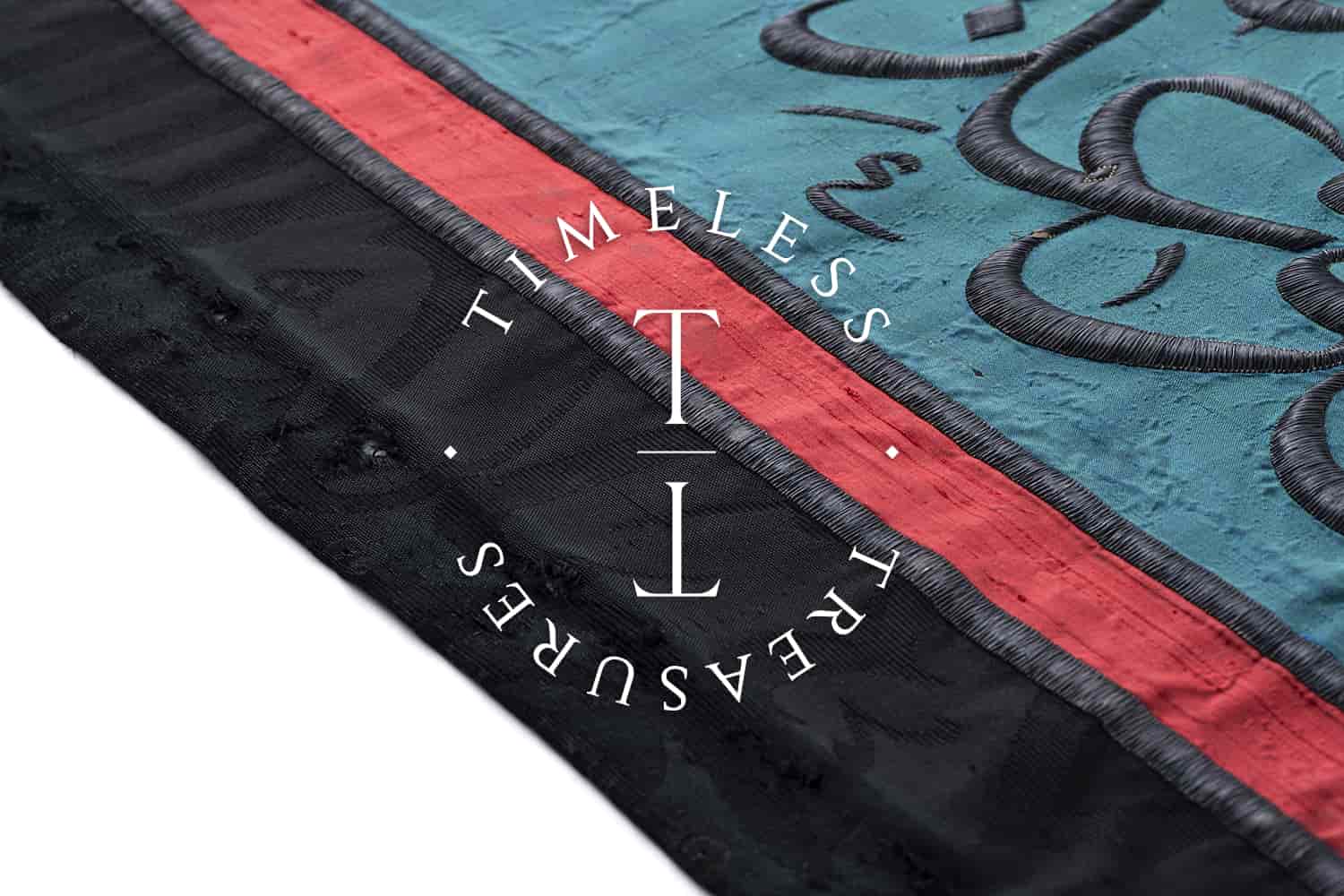
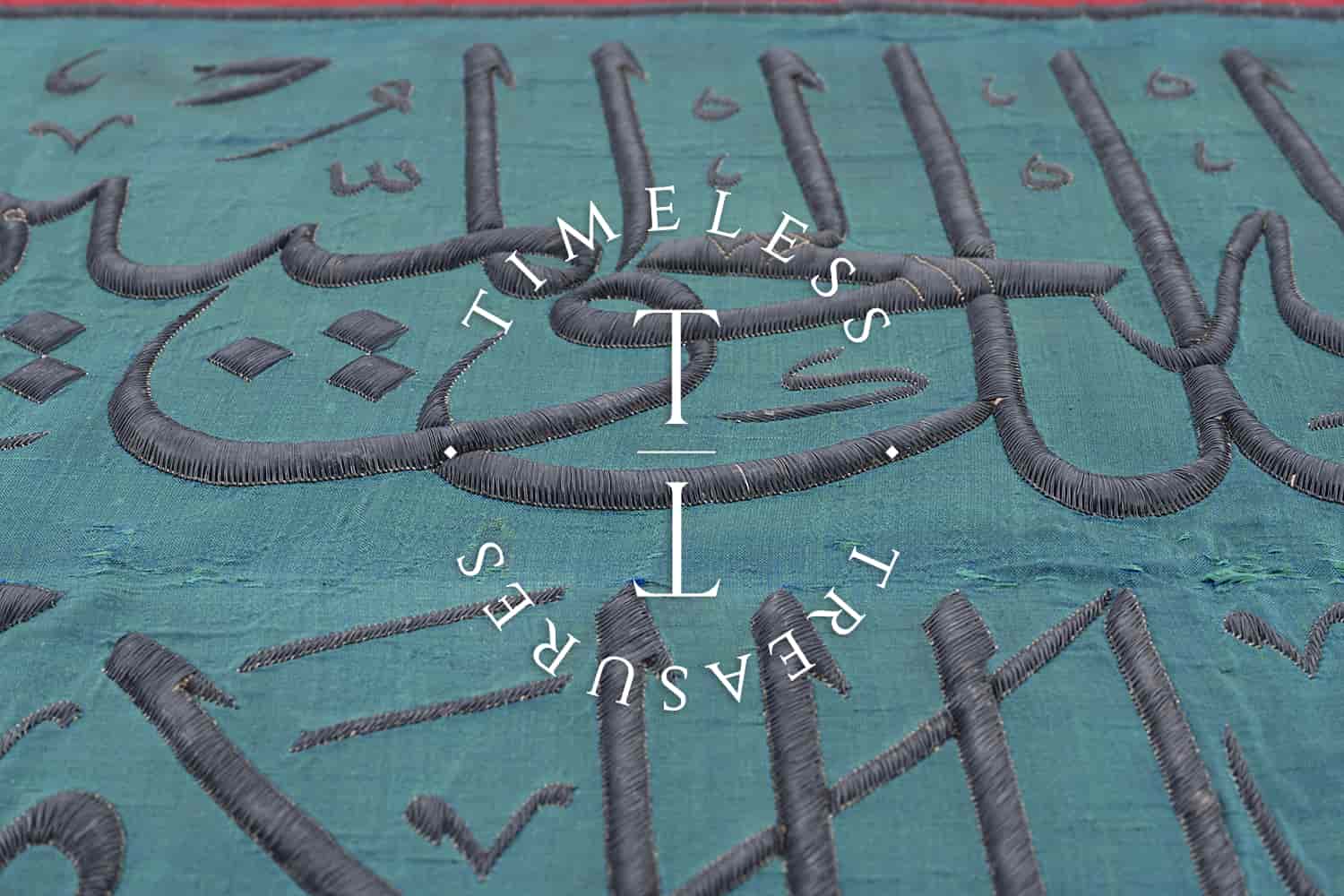
The design, created from a mold fashioned by Abdullah Zühdî Efendi himself, showcases his exceptional mastery in calligraphy and ornamentation, as seen in his celebrated work at the Masjid al-Nabawi under the patronage of Sultan Abdulmecid Khan. Using a silver quill and the intricate dival work technique, this sacred textile is rendered on sumptuous green and red satin, applied meticulously to the black fabric of the Kaaba’s inner cover.
The inscription, in celî sülüs script, reads:
“Lâ ilâhe illallâhül melikül hakkul mübîn Muhammedün resûlüllâhi sâdikul va’dil emin sa Vesellim”
Translation: “There is no god but Allah, the Sovereign, the King, whose truth and existence are manifestly clear. Muhammad (peace be upon him), the truthful and trustworthy in his promise, is the Messenger of Allah (peace be upon him).”
Description
This breathtaking piece is a remarkable reflection of Abdullah Zühdî Efendi’s artistry, which continued to flourish even after his service in Medina. He was later commissioned by Khedive Ismail Pasha to design Kaaba covers at the Dar-ül Kiswa workshop, founded in 1817 and renowned for producing the Kisve-i Şerife, the sacred covering of the Kaaba, along with other textiles for the holy sites of Mecca and Medina.
- Material: Green and red satin, silver quill, dival work technique
- Inscription: Celî sülüs script
- Provenance: Private collection, referenced in Al-Astaar al-Haramayn (1996) by Hülya Tezcan
- Condition: Exceptional; preserved in excellent condition
As a rare artifact of Islamic heritage, this Ka’bah cloth encapsulates the spiritual and artistic heights achieved by the Ottoman Empire. It is a highly coveted relic that connects the collector to the sacred and historical fabric of Islamic artistry and Ottoman patronage, with an immense spiritual resonance and historical valu
Condition: In overall excellent condition.
Who is Abdullah Zuhdi Effendi?
Abdullah Zuhdi Effendi was a prominent Ottoman Turkish calligrapher of the 19th century, best known for his elegant Thuluth and Naskh scripts and for his monumental inscriptions in Al-Masjid al-Nabawi (the Prophet’s Mosque) in Medina. He held the prestigious title of “Katib al-Haramayn” (Calligrapher of the Two Holy Sanctuaries), indicating his official role in creating calligraphy for the holy cities of Islam.
Role in Medina: He was commissioned by the Ottoman Sultan Abdülmecid I to inscribe the renovated interior of the Prophet’s Mosque in Medina in the early 1860s.
He is credited with the gilded inscriptions inside the Rawda (the sacred chamber), including Quranic verses and invocations around the Prophet Muhammad’s tomb. His work there is considered one of the most significant examples of Ottoman religious calligraphy in situ.
He is regarded as one of the last great figures of classical Ottoman calligraphy before the modernization and Westernization movements of the late 19th and early 20th centuries.