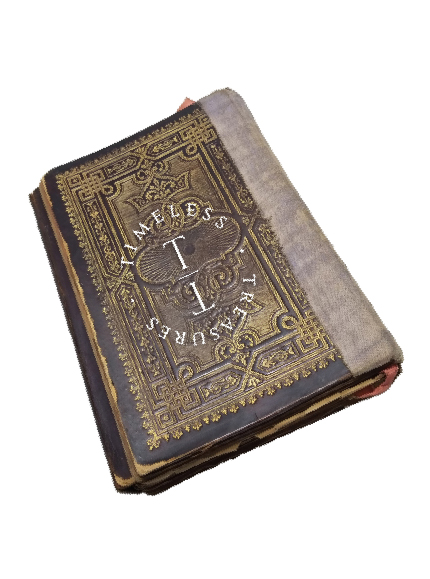
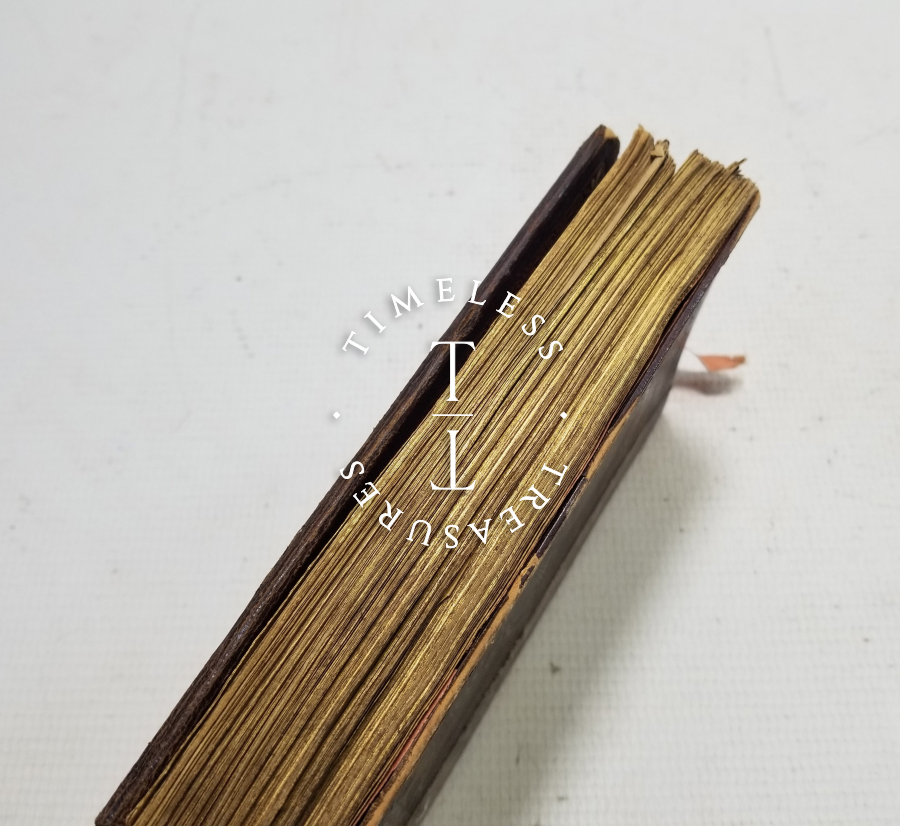
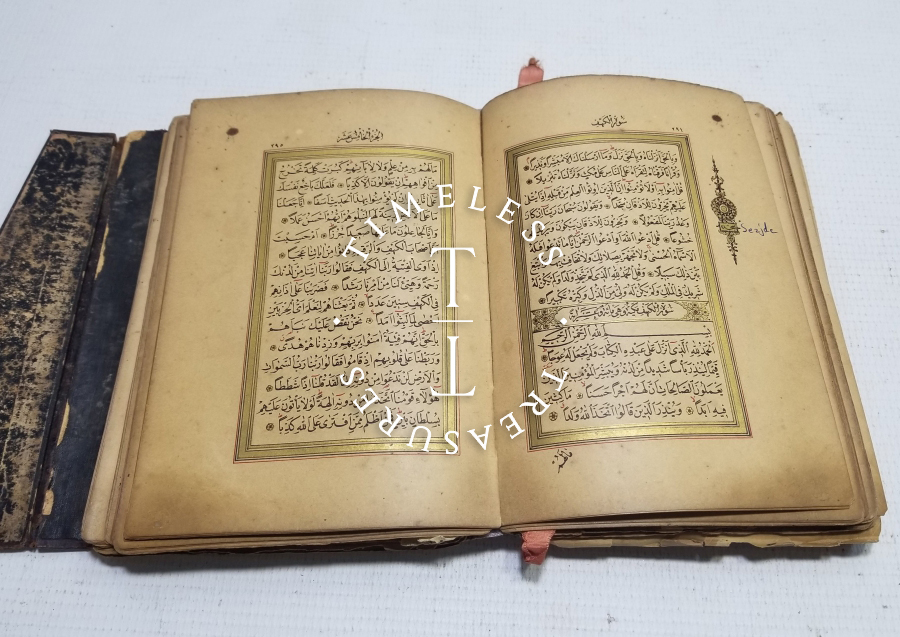
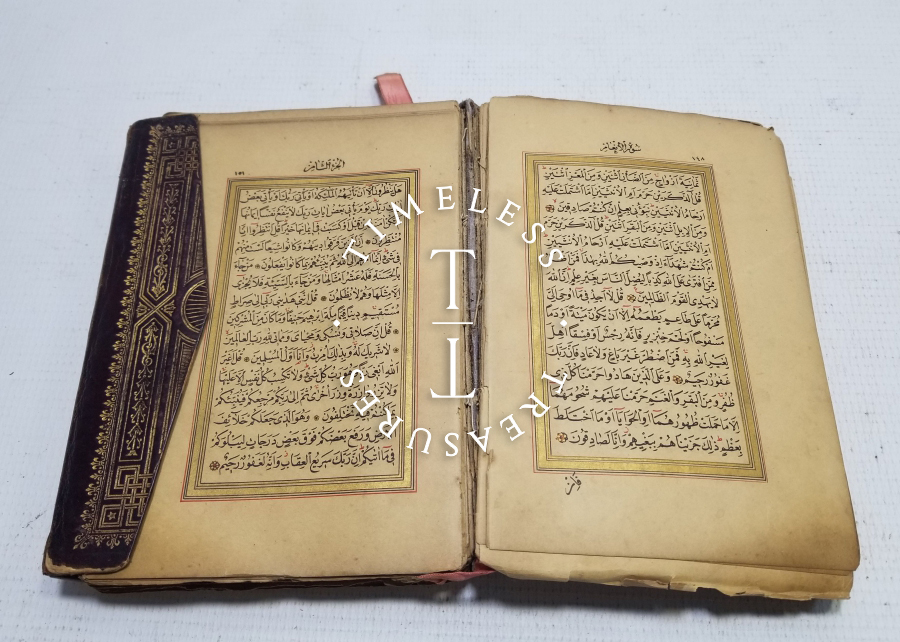
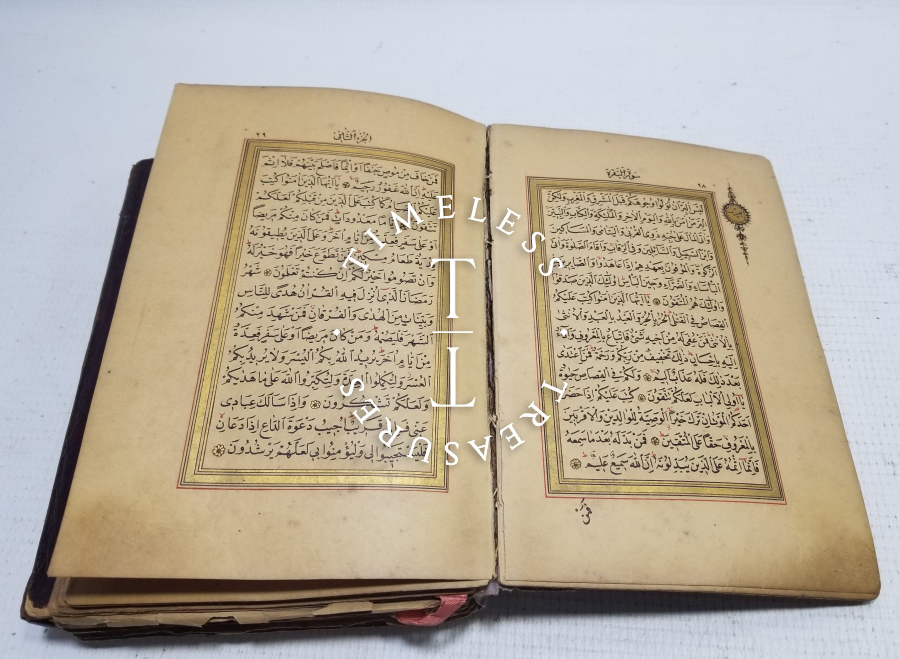
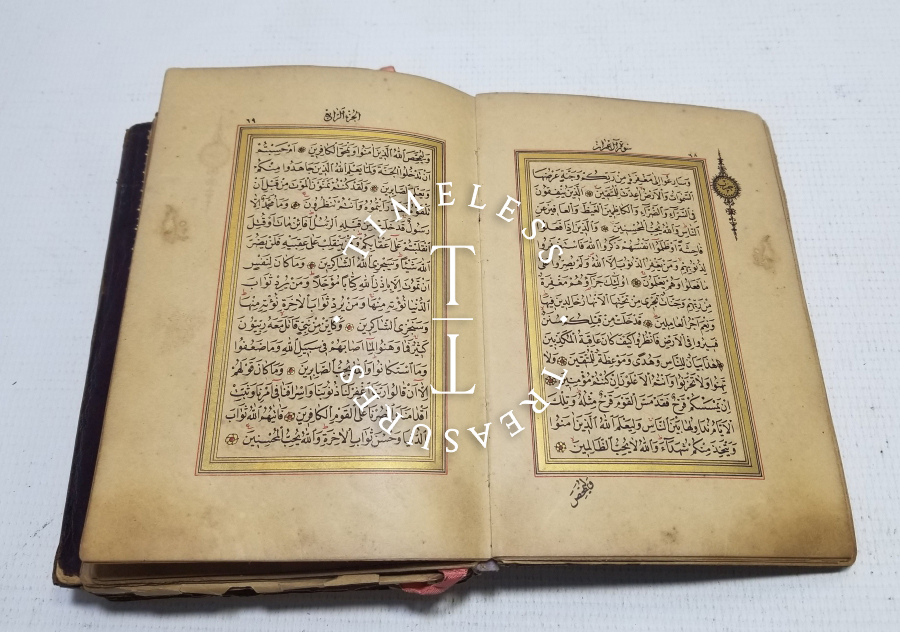
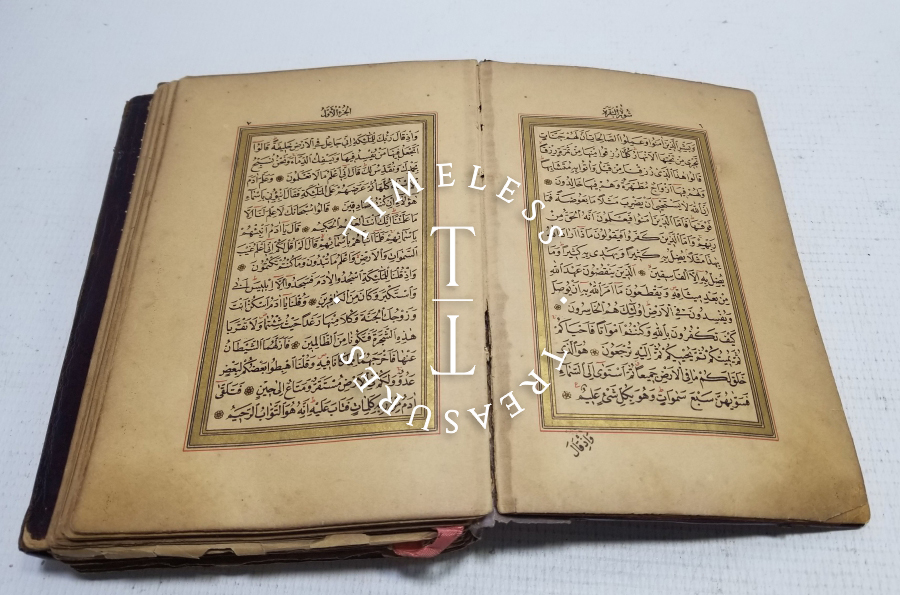
Official Ottoman Qur’an Printed Under Sultan Abdul Hamid II – 1323 AH
£2,750.00
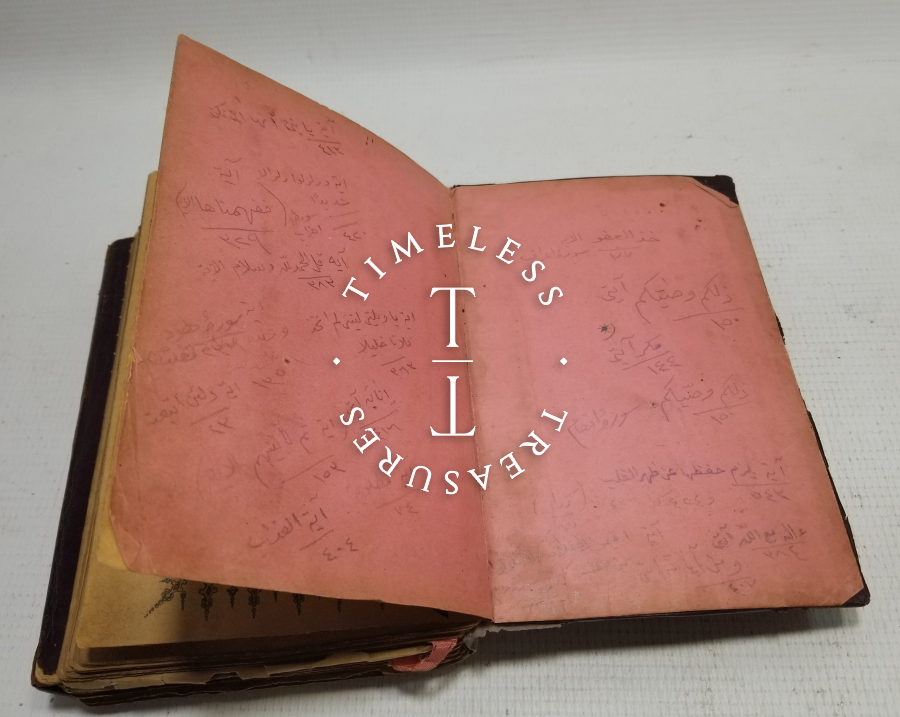
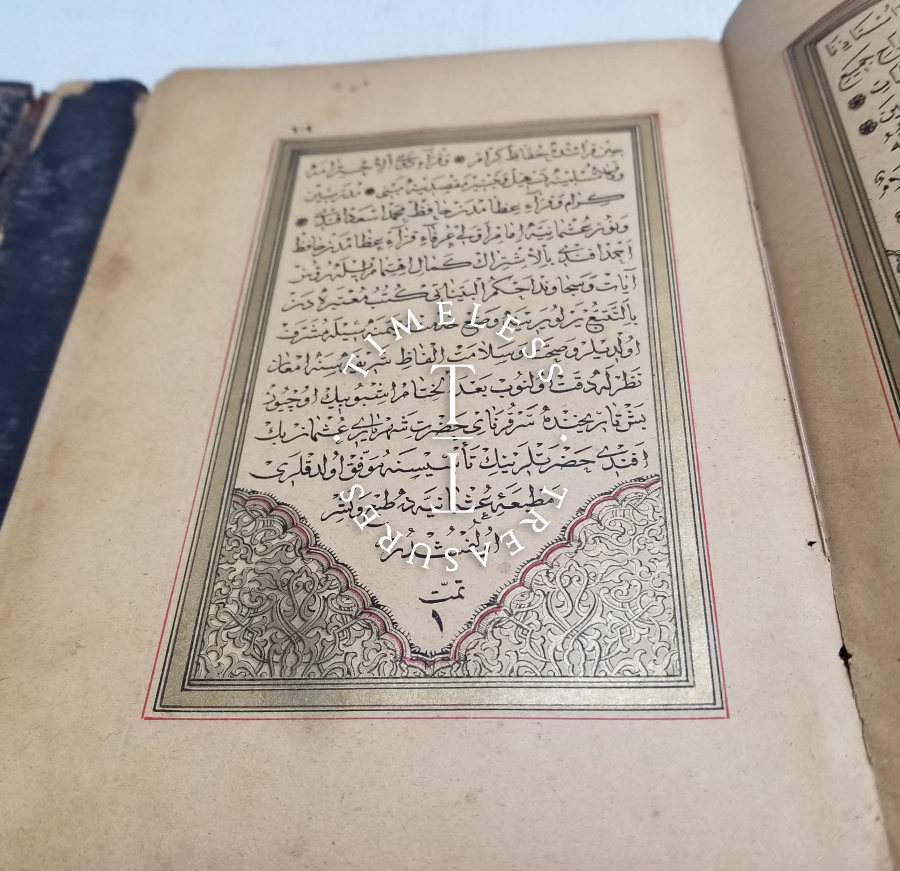
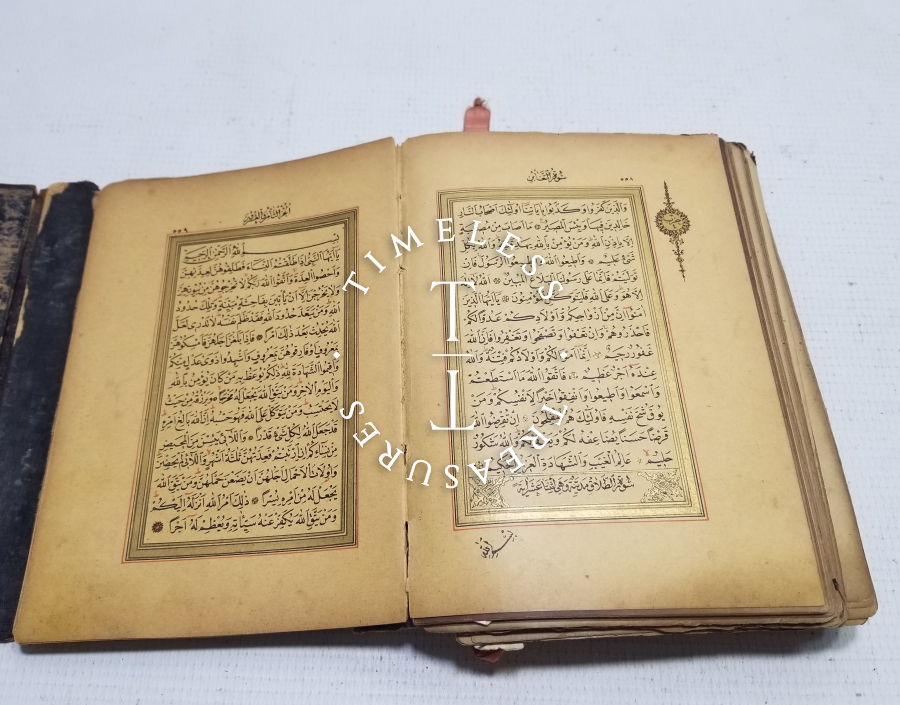
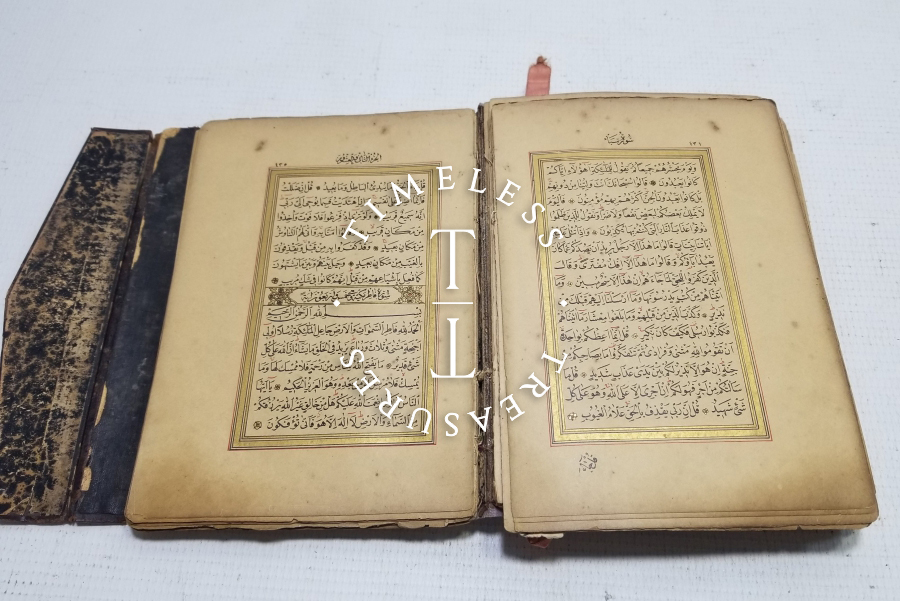
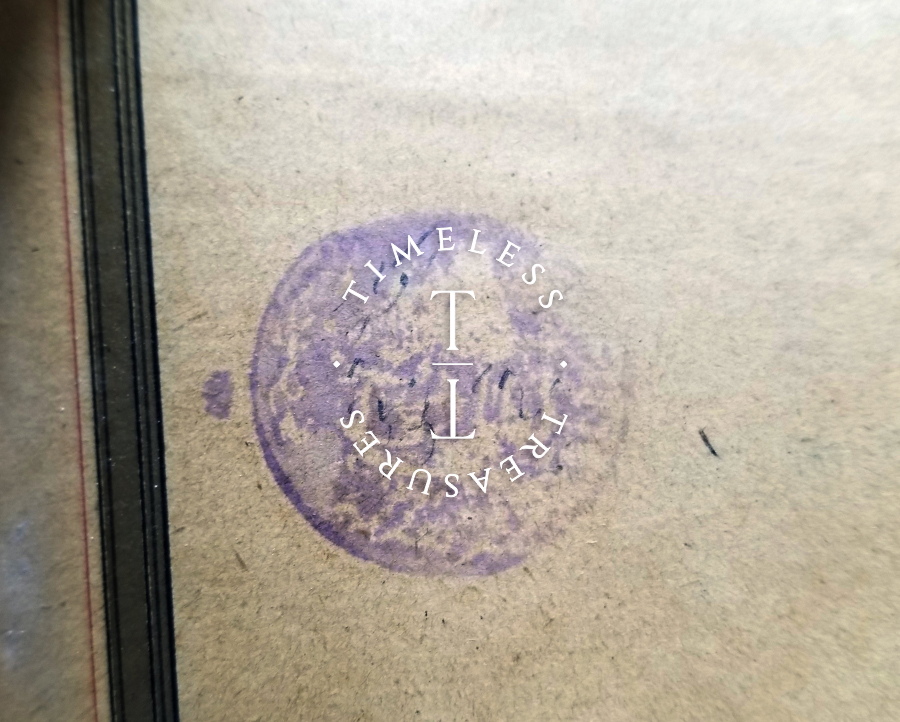
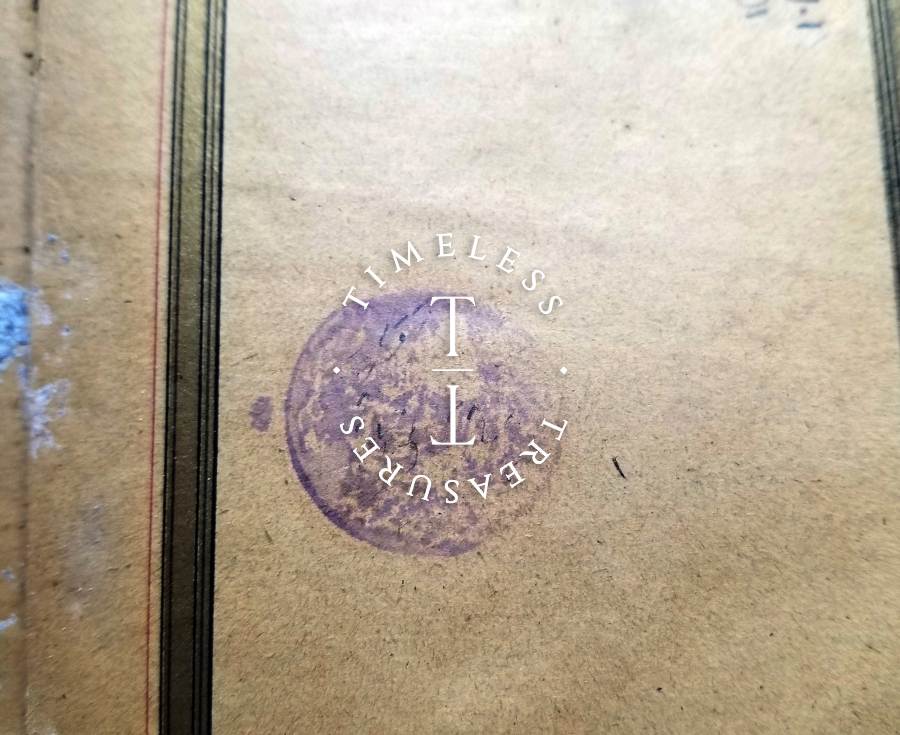
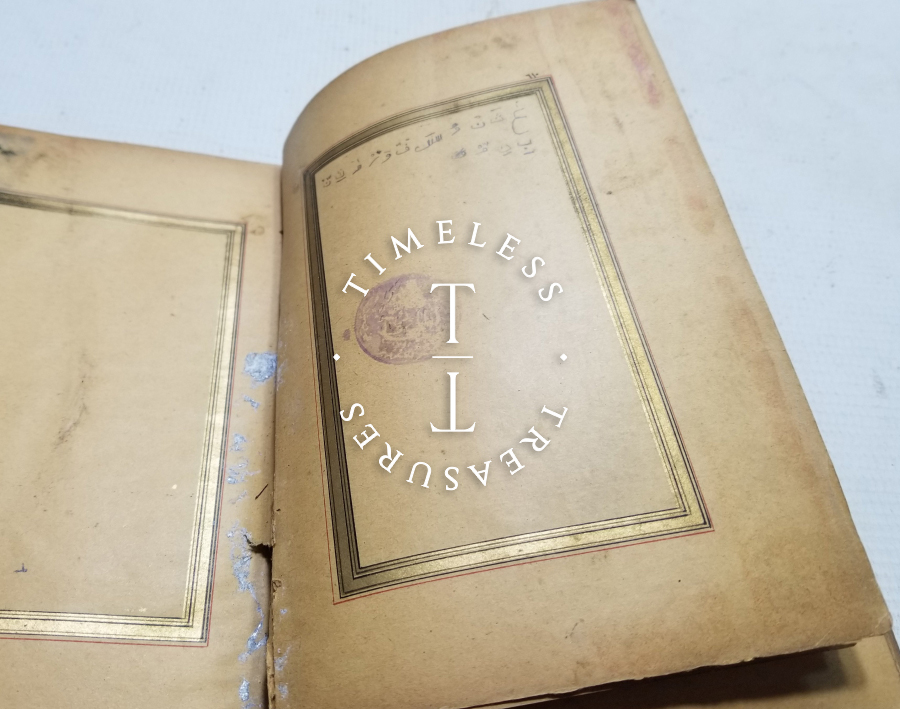
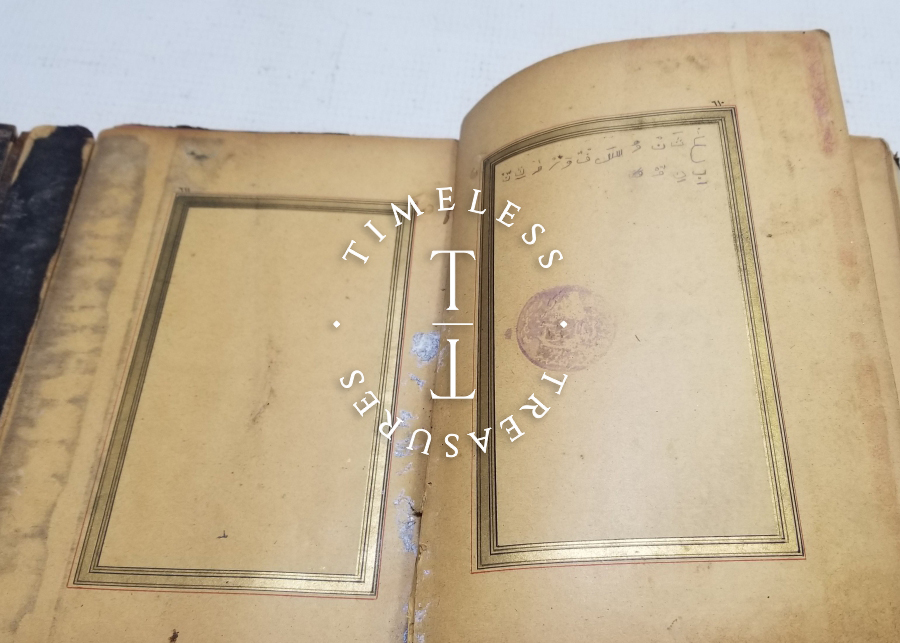
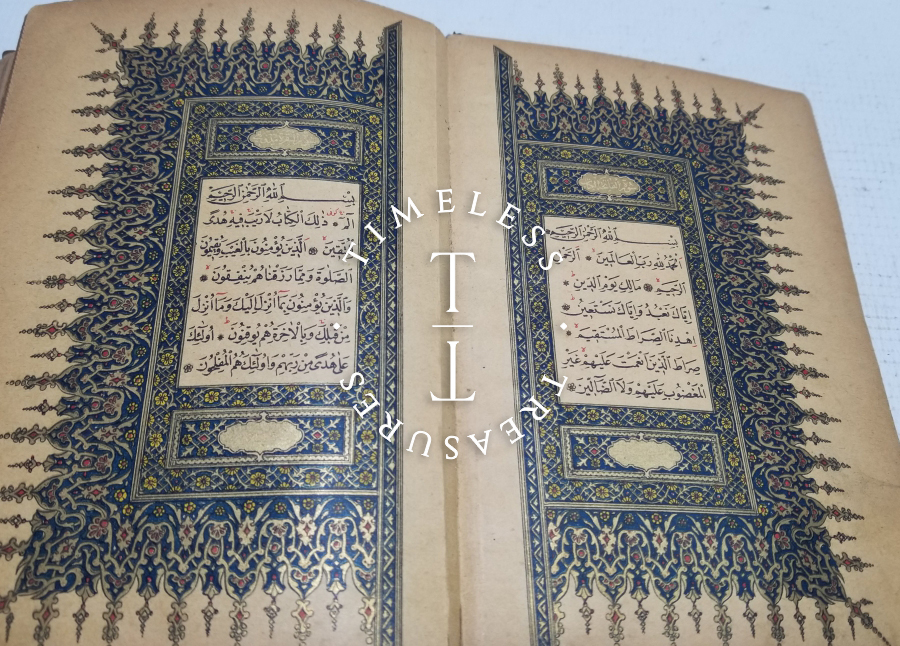
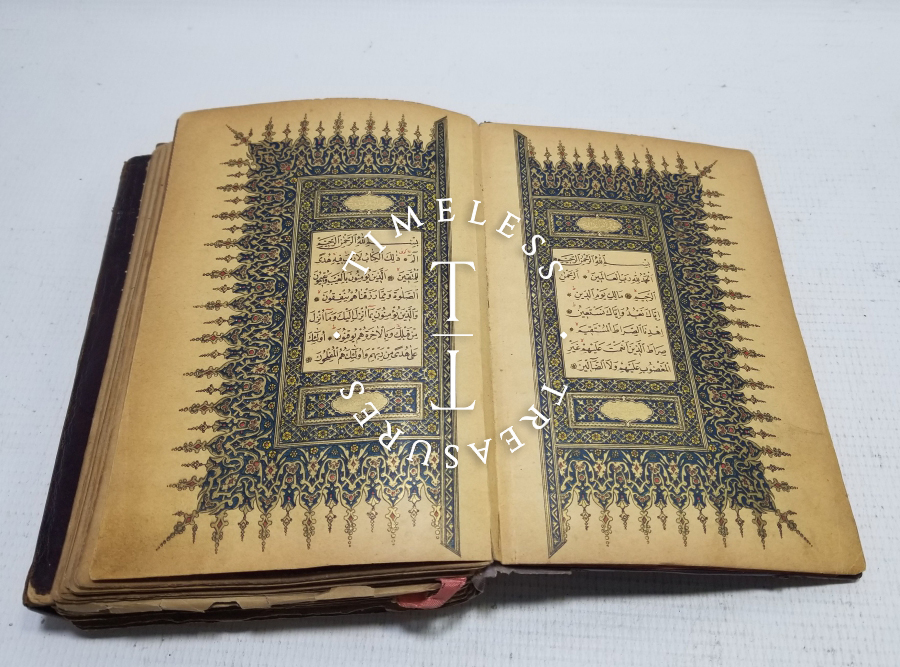
The official Qu’ran printed by the order and under Sultan Abdul Hamid II with stamp.
The Qur’an printed by the order of Sultan Abdul Hamid II (reigned 1876–1909) is an important milestone in the history of Islamic printing. Sultan Abdul Hamid II, the 34th Ottoman sultan, was a advocate of modernisation while maintaining the Islamic character of the empire. One of his significant initiatives was the state-sponsored printing of the Qur’an using the latest printing technologies of the time.
Description
The Abdul Hamid II Qur’an: A Landmark in the History of Islamic Printing
Ottoman Empire, Late 19th Century
Until the late 19th century, the printing of the Qur’an faced strong opposition across the Muslim world, as only manuscript copies penned by skilled calligraphers were deemed worthy of reproducing the sacred text.
Under the enlightened patronage of Sultan Abdul Hamid II, however, technological advancements and growing educational needs justified the move toward carefully supervised printing. Commissioned through the Imperial Printing Press (Matbaa-i Amire) in Istanbul, the first printed Ottoman Qur’ans maintained the aesthetic integrity of handwritten manuscripts, with lithographic plates crafted by master calligraphers and enhanced with fine paper, high-quality ink, and, in some editions, gold embellishments.
These printed Qur’ans were widely distributed across the Ottoman Empire and beyond—reaching Central Asia, Africa, and Southeast Asia—supporting educational initiatives and countering Western missionary efforts.
A transformative moment in Islamic history, the Abdul Hamid II Qur’an laid the foundation for the acceptance of printed sacred texts, ensuring broader accessibility while upholding reverence for the divine word.