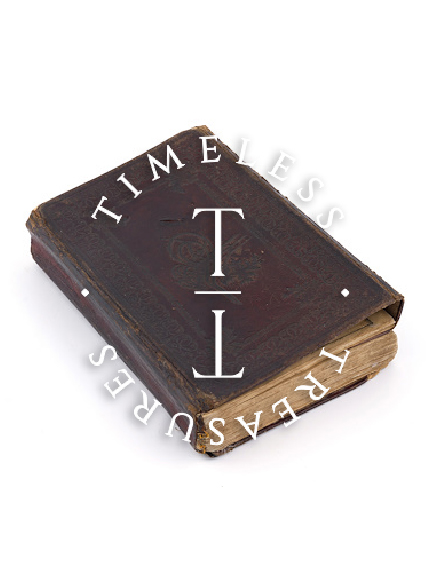
Sahih Al-Bukhari – First Edition (1289 AH / 1872 AD) 4 Volumes, BULAQ PRESS
£2,750.00
Cairo, Egypt, 1289 AH / 1872 CE
In four volumes
A monumental milestone in the history of Islamic scholarship and Arabic printing, this is the first printed edition of Sahih al-Bukhari, produced by the celebrated Bulaq Press of Cairo in 1289 AH (1872 CE). Revered as the most authoritative collection of hadith in Sunni Islam, this edition marks the pivotal shift from manuscript transmission to the era of typographic print—an innovation that expanded accessibility while preserving textual fidelity.
Commissioned under state auspices and carefully typeset by scholars, the edition reflects the rigorous standards of earlier manuscript traditions while embodying the clarity, consistency, and reach of 19th-century Arabic printing. The Bulaq Press, founded in 1820, was a beacon of reformist scholarship and intellectual renaissance in the modern Arab world.
- Printer: Bulaq Press, Cairo
- Date: 1289 AH / 1872 CE
- Volumes: 4, in Arabic
- Binding: Rebound in later red leather
- Condition: Overall excellent; a few internal pages professionally restored
Description
This edition is not only a foundational reference for Islamic jurisprudence and theology but also a rare bibliographic artifact of early Arabic printing—a cornerstone for collectors, scholars, and institutions preserving the legacy of Islamic intellectual history.
Historical Context
- Bulaq Press (Matba‘at Bulaq) was the first official printing press in Egypt, established in 1820 under the direction of Muhammad Ali Pasha.
- By the time of the 1289 AH (1872 AD) edition, Bulaq had become a major hub for scholarly Islamic publications across the Arab world.
Significance of the Edition
- This 1289 AH edition is widely recognised as the first printed edition of Sahih al-Bukhari.
- It marked a pivotal moment in Islamic publishing—transitioning Islamic classical texts from manuscript tradition to print culture.
- Used extensively by scholars during the late Ottoman period and in the early modern Islamic reform movements.
- The text was printed in beautiful Arabic typography, often with diacritics to preserve pronunciation and reading integrity.
Editorial Features
- Based on carefully preserved manuscripts.
- Includes traditional chapter headings (abwab) and isnad (chains of transmission).
- Has marginalia not
Collectability
- First editions from the Bulaq Press are highly collectible, especially in good condition.
Comparable copies of this historic Bulaq edition have been offered by leading rare-book dealers in London at valuations of £10,000.
Our intention, however, is not simply to treat this work as a collectible commodity, but to see it preserved in the hands of those who recognise its true worth — as a vessel of sacred knowledge, a monument of the Islamic scholarly tradition, and a rare artifact from the earliest age of Arabic printing.
Works such as these were studied, transmitted, and safeguarded by generations of scholars and students. We hope this edition finds a home in a library where it will continue to be valued not only for its rarity and historical significance, but also for the spiritual and intellectual legacy it represents.
In an age where so much of our heritage is dispersed into private markets and institutions, preserving works like this within the Muslim community carries a significance beyond mere collecting.